
Hello from Namibia! I have officially completed my first week in N/aan Ku Se. A fun fact that I learned today is that the ‘/’ in ‘N/aan’ symbolises a ‘click’ sound typically used in Khoe (their traditional language).
I arrived in Windhoek airport after a very long 26 hours of travelling. Thankfully, there is only a 1 hour time difference between Namibia and Ireland, so I didn’t have to grapple with the normal dissolution that you find at the end of a long flight journey. I was met by Jackson at the airport, who was holding up a sign with the words ‘Anna Dwan and Caitlin Galloway’ on it. I sat beside him and we both waited for Caitlin, or Lin, to join us. Soon enough, the three of us were en route to Bush Camp, the furthest campsite from the main Farm Camp of N/aan Ku Se. Our tent is lovely. It’s on stilts and has an outdoor shower and bathroom. We were joined by a scorpion for the tour, which was a friendly reminder that we were in the wild. We had a quick tour of the main Farm Camp shortly after, followed by a meal prepared by their team and a pint on the sunset roof deck, overlooking the savannah. It was the perfect first night. The landscape stretched for miles, there were mountains poking up from all corners, bushy trees dotted across the plains and long grasslands where the occasional impala and giraffe could be spotted.


Day 1
Day 1 started with an early rise at 6:30am and a walk to the Lappa (our main communal space) where a breakfast buffet was laid out. It was a bit too early to socialise with everyone there, but it was lovely to watch as the space gradually filled up with fellow volunteers. At 8, we all have to meet in the Food Prep area where the coordinators then announce our tasks for the day based on our teams. I am in Team Cheetah and on Monday I was to support the K9 team and then clear roads in the afternoon. My team of 7 hopped in a truck and headed to the Zannier reserve where carnivores and the more dangerous predators are (lions, rhinos etc). The K9 team are part of the APU (anti-poaching unit) and are based in this reserve as this is where poachers typically try to attack. They walked us through general training that they do with the dogs from their early puppy stages and right through to their retirement. We also learned a lot about poachers, their techniques, what animals they typically hunt for etc. Unfortunately, former and current rangers, policemen and pilots can often be bribed by poachers to show them the lands and support in poaching and this has become a big issue in Namibia as Americans often offer huge sums of money that Namibians find hard to turn down, and so it’s a difficult cycle to stop. Our ranger discussed how poaching is viewed in Namibia and he made a point that I found very interesting. In Namibia, poaching is viewed as theft from Mother Nature. The Namibian people and government recognise Mother Nature as an owner of all land and wildlife and to steal from what she owns is considered a very serious crime. I thought this was interesting in how they view nature as its own entity that does not need to be owned by anyone else. I might be wrong in saying this, but in Western culture, nature, land, animals etc all tend to be owned or overseen by some sort of entity (private or public – such as the OPW) and I’m not sure if ‘Mother Nature’ is recognised as its own entity. But I like how the rangers discussed the connection we all have to nature and no one has any right to steal from it #philosophy


I realise I am discussing Day 1 in great detail, but it’s where I learned the ropes so I may as well take ye along with me…In the afternoon, we did road clearing with Jeremiah, which involved us chopping down trees and bushes that were growing out into the roads and obstructing views. Jeremiah has become a star among us volunteers. He is, as my aunt would say, a ‘gentle soul’ and such an angel. He is 23 and has 2 kids. In Namibia, it is common that your family cuts you off if you have a child out of wedlock or while you are still in your teens, so Jeremiah has been working hard to try and provide for his children while not having much support from his family. He also cares for his brother who has a disability. Jeremiah told us that his dream is to be a tour guide, and he works every day at the road clearing to try and earn enough money to provide for his family while also setting aside some for college, but he said it might take 10 years before he can afford to study. He had unwavering faith in the most beautiful way. He is not worried that he might not study as he believes God is watching over him and will help him reach his dream, he just needs to be patient. We all love him very much and are all rooting for him to become a tour guide!
Day 2
Team Cheetah were down for elephant trekking and research today. We were driven around into the Zannier reserve, where wild animals are kept and allowed to roam freely while being protected from poachers. The elephants are collared, which means we had to set up a metal tool that was connected to a reader and would indicate in which direction they were. We roamed through the bushes until we finally found them, though I thought they were rocks in the distance until I saw they were chewing on the trees. There were 3 elephants. One large and two medium. The large elephant was considered a problem animal (causing danger to local communities) and so it was decided that he must be kept in a reserve in order to avoid being killed. The other two elephants were being trafficked to Dubai as babies when security at Windhoek Airport noticed that the signatures in the elephants’ papers were not matching and they clocked that this was illegal trafficking. They reached out to the original owner and asked that they be collected, but they have not heard from this owner in years, and so they are kept in Zannier for their safety. We spent the rest of the morning replacing camera traps and driving through the reserve.


After a good lunch in the Lappa and some socialising, we returned to the research team’s office and spent the afternoon going through the camera pictures. We had to identify the animals in the pictures and move them into their respective files. The team do this as a means of making sure that there aren’t any poachers in the reserve and also to ensure that the animals are doing well (e.g. if they haven’t seen X rhino in a few weeks, alarm bells will begin to ring). It was an interesting activity and it was a good way to familiarise ourselves with the hundreds of animals that roam the reserve. They day ended in the Lappa with some good food, a few drinks and some very good vibes as we watched the sunset.


Day 3
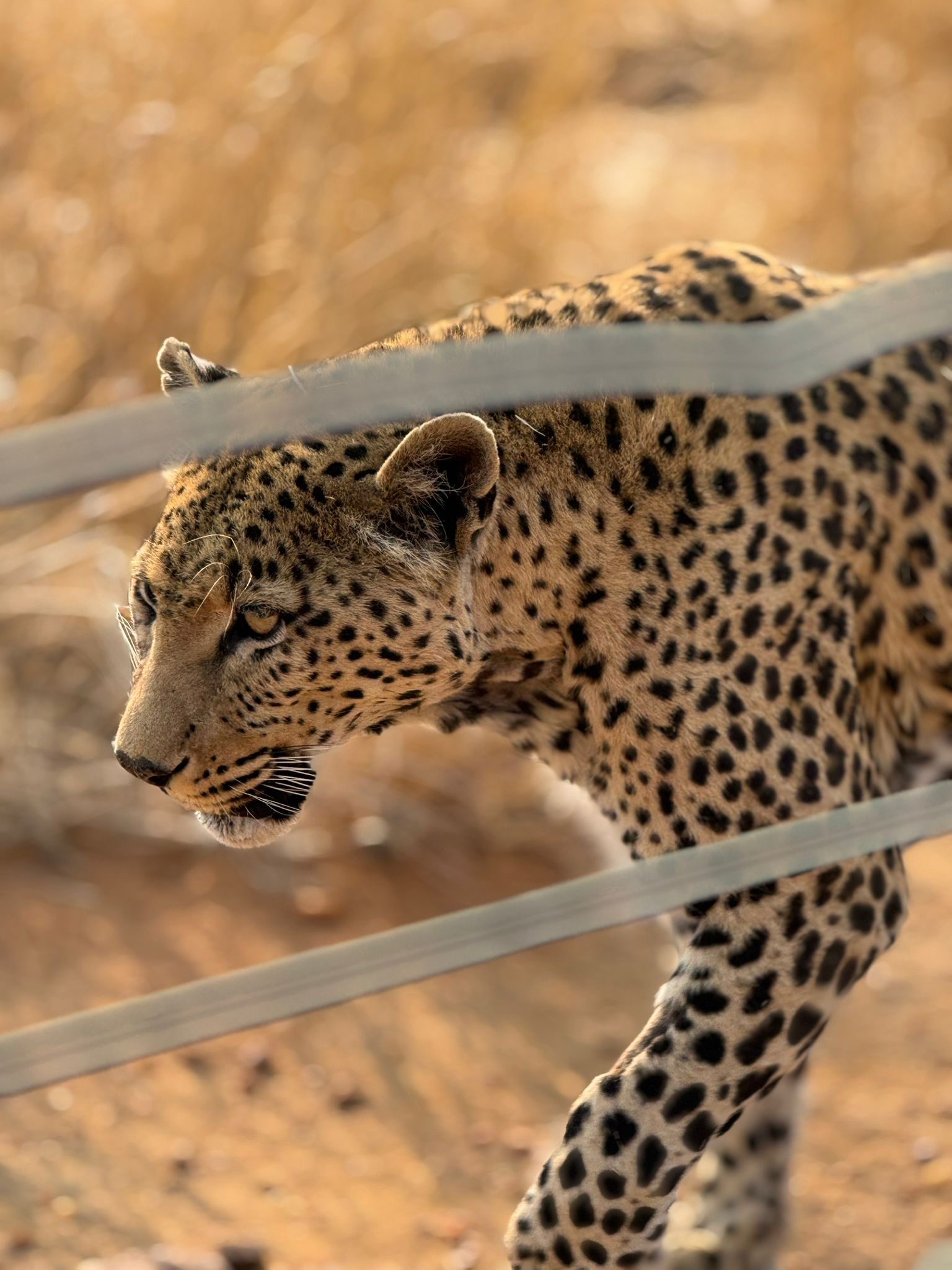
I was very excited for Day 3 as Team Cheetah were going to be working with the cheetahs in the morning. On the way to the cheetah run, we stopped by Shakira the leopard, who is the most gorgeous girl ever and a little poser. She has a very loud purr so you would hear her before you would see her, but she was a little sweetheart. We moved on to the cheetah run and our coordinators opened up the gates and let us in, without much instruction or concern for safety. Their calmness, however, was indicative of how we should feel as the three cheetahs approached us and immediately rubbed their backs along our legs and lay down near us. There are 2 females (Roady and Athena) and one male (Kovu). Roady is named as such as her mother was hit by a car when they were crossing the road. As Roady was only a cub, she was left unable to survive in the wild as she had not learned any survival instincts from her mother. Athena was orphaned at childbirth as her mother died giving birth. She was raised in captivity and therefore, similar to Roady, had never learned any survival instincts. Kovu was kept as a pet and has no fear of humans, which puts him at risk in the wild as poachers could quite easily approach him. The three cheetahs are all kept here as a result where they can roam safely despite having few wild instincts.
We set up a pully system for them and attached a red cloth, which would shoot around the run and entice the cheetahs to chase it. This is one of the steps that the team take to try and train the cheetahs in the hopes that they might eventually be able to be released in the reserve. Unfortunately, they aren’t as agile as they need to be, and often skid or fall around the corners when chasing the cloth, which is a sign that a cheetah isn’t fit to be in the wild just yet. But hopefully with a bit more practice they can eventually go into the reserve!
In the afternoon, I joined an introduction talk for newbies and so missed out on raptor cage cleaning. We ended the day with some drinks, food, and good music in the Lappa. This new evening routine is something I can very much get used to. It was a good day.


Day 4
On Friday, Team Cheetah joined the APU team on a morning patrol around the reserve to ensure no poachers were in the area as well as checking in on the various animals. Unfortunately, we did not see any animals, but we did get our steps in and investigated various types of poops. Fun Fact: In Namibia, elephant poo is very good for you and is often used to treat various ailments, including covid. I think they steam the poo and then inhale it? Not too sure…
The afternoon was spent walking the baboons. Usually, the baboons are kept in big open cages as they are considered pests in the wild and so are often shot or fall victim to traps. Instead, they are kept here with lots of space and are taken on walks everyday by the volunteers. They are adorable and very playful. Also lazy…they’ll sit on our shoulders for much of the walk until we come near some trees where they’ll then jump about and pick at flowers, insects and whatever else they can find. They are such characters though and its hard to imagine how anyone could view them as pests. They are also scarily human-like when they stand up on two legs and march around, or use their hands to pick at things/hold your hand. It all adds to the entertainment of course….
Friday evening was spent getting to know some more volunteers and having drinks as we watched the sunset. There’s a huge age range among volunteers. Many 18-24 year olds and then many retirees, which creates a lovely dynamic between everyone…usually (there has been the occasional fight in the whatsapp groupchat).


Day 5
Saturday was spent lounging at the pool at Bush Camp with several other volunteers. As we weren’t working or surrounded by dozens of people, it was a great opportunity to get to know people a lot closer. We had a pool bar as well, so a few Savannah ciders were consumed in addition to coffees and milkshakes. On Saturday night, there is a ‘braai’, which is a traditional African BBQ where meat is cooked in cauldrons above fire. I can confirm it tasted 10/10. The chefs here are great and so lovely. We all filled our bellies up and then drank some more ciders around the pool table as the competition heated up.


Day 6
On Sunday, I booked to go with some volunteers to Windhoek, the capital of Namibia. We were dropped off at a local craft market, which was amazing. Many beautiful batiks, wood carvings, traditional jewellery etc could all be found here. We were then dropped to a shopping centre where we all got a nice big lunch and picked up some bits we needed for the remainder of our time in Namibia. That evening was spent the same as every other…a good plate of food at the Lappa where we socialised some more and did some stargazing. A former colleague of mine from South Africa had told me how beautiful the Namibian night sky is and he didn’t lie…it’s different to any night sky I’ve seen before. Now off to bed before a new week!

